
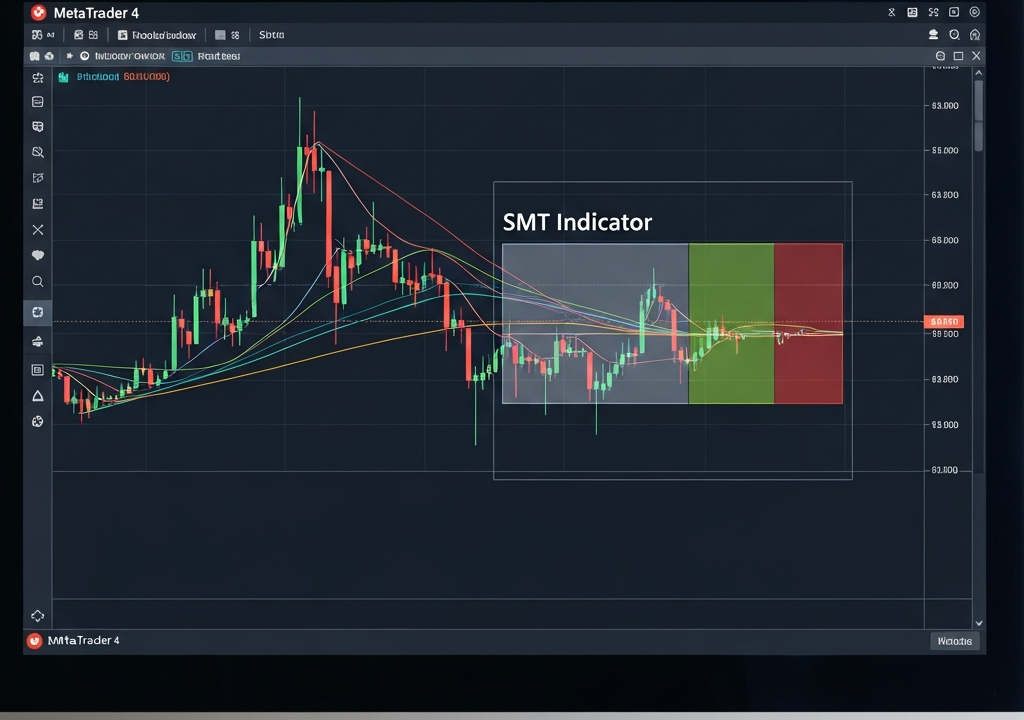
Understanding Smart Money Divergence in Modern Markets
As we navigate the trading landscape of 2026, the divide between retail methods and institutional execution has never been more apparent. While many traders still rely on lagging oscillators, the pros are looking at price action through the lens of Smart Money Concepts (SMC). At the heart of this approach lies a powerful tool known as the SMT (Smart Money Tool) indicator. This isn’t just another flashy line on a chart; it is a correlation-based system designed to reveal where the big players are hiding their footprints.
The core philosophy behind the SMT indicator is simple yet profound: correlated assets should move in harmony. When that harmony breaks, it signals a “crack in correlation,” often indicating that institutional investors are accumulating or distributing positions. By using an SMT indicator on MetaTrader 4 (MT4), you can automate the process of spotting these discrepancies, giving you a significant edge over those who only look at a single currency pair in isolation.
The Logic of Market Correlation
To appreciate how the SMT indicator works, you first have to understand the relationship between certain assets. In the Forex world, the EUR/USD and GBP/USD pairs typically move in the same direction because they are both priced against the US Dollar. Similarly, the US Dollar Index (DXY) usually moves in the opposite direction of these pairs. When the EUR/USD makes a lower low but the GBP/USD fails to do so, something is wrong. This failure to swing in unison is the SMT divergence, and it suggests that the downward move in the Euro might be a trap or a liquidity grab.
How the SMT Indicator Functions on MT4
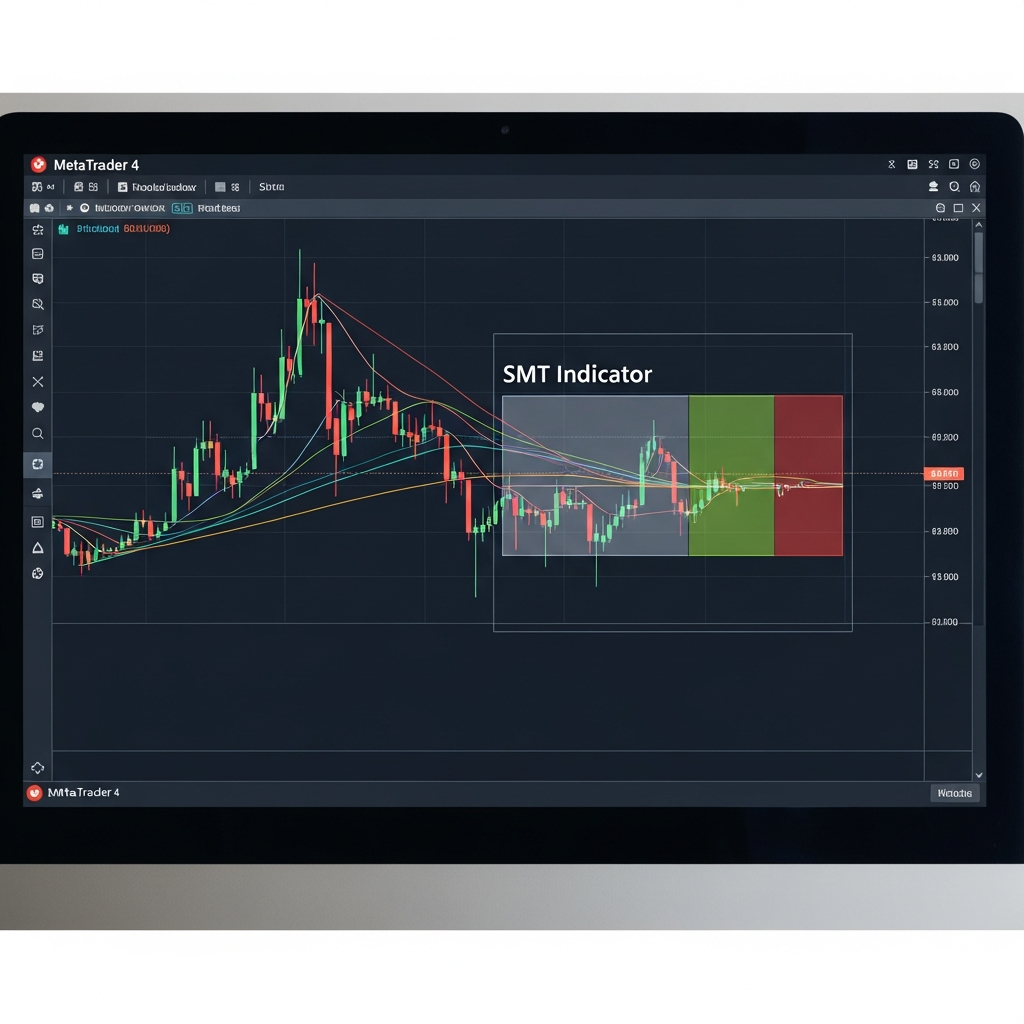
The SMT indicator for MT4 simplifies what used to be a tedious manual task. Traditionally, a trader would need to have two or three charts open simultaneously, squinting to see if one pair hit a specific level while another didn’t. The modern SMT indicator overlays this data or provides alerts when a divergence occurs between your primary pair and a correlated secondary pair.
Institutional traders move such large volumes that they cannot enter the market all at once without causing massive price spikes. To get filled, they need liquidity—which usually exists in the form of stop-losses resting above old highs or below old lows. The SMT indicator highlights when price “hunts” this liquidity in one pair but lacks the momentum to do so in another. This lack of confirmation is the secret sauce for identifying high-probability reversals.
Identifying Bullish and Bearish SMT Divergence
There are two primary ways to read the SMT indicator, and both revolve around the concept of “failure swings.”
- Bullish SMT Divergence: Imagine EUR/USD and GBP/USD are both trending downward. EUR/USD breaks a previous swing low, making a fresh Lower Low. However, GBP/USD stays above its previous swing low, creating a Higher Low. This discrepancy tells us that the British Pound is showing relative strength. The “Smart Money” is likely buying the Pound, and the Euro’s move lower might be a stop-run before an upward reversal.
- Bearish SMT Divergence: In an uptrend, if EUR/USD makes a Higher High while GBP/USD fails to break its previous peak (making a Lower High), it signals relative weakness in the Pound. The institutions are likely offloading their positions, and a market drop is often imminent.
Setting Up the SMT Indicator for Success
Installing the SMT indicator on MT4 is straightforward, but configuring it requires a bit of strategic thinking. You need to decide which assets you want to compare. While EUR/USD and GBP/USD are the classic choices, many advanced traders compare their primary pair against the DXY. Since the DXY is the inverted reflection of the major pairs, you would look for an SMT divergence where the DXY fails to make a Higher High while the Euro makes a Lower Low.
Once the indicator is on your chart, you should adjust the settings to match your trading timeframe. While SMT works on everything from the 1-minute chart to the monthly, it is most potent when found at key institutional levels, such as Order Blocks, Fair Value Gaps (FVG), or daily highs and lows.
Practical Trading Strategies with SMT
Simply seeing a divergence isn’t enough to click the ‘buy’ or ‘sell’ button. You need a structured plan. The most successful traders use the SMT indicator as a confirmation tool rather than a standalone signal. Here is a common workflow used in 2026:
Step 1: Identify the Higher Timeframe Narrative
Before looking at the indicator, determine the overall trend. Are we in a bullish expansion or a bearish retracement? SMT works best when it aligns with the higher timeframe bias. If the weekly trend is up, you should primarily be looking for bullish SMT divergences at discount prices.
Step 2: Locate Key Liquidity Zones
Wait for price to reach a significant area, like a previous day’s low or a 4-hour Order Block. This is where the “Smart Money” is most likely to act. When price enters this zone, your eyes should move to the SMT indicator.
Step 3: Confirm the Divergence
As price taps into your zone, check if the correlated pair is behaving differently. If your pair sweeps a low but the correlated pair doesn’t, you have your SMT confirmation. This suggests the sweep was a move to clear out retail stops before the real move starts.
Step 4: Entry and Risk Management
Enter the trade once you see a shift in market structure (like a break of a short-term high) following the SMT divergence. Place your stop-loss just below the low created during the SMT event. Because SMT entries often catch the very beginning of a move, the risk-to-reward ratios can be exceptionally high, often exceeding 1:3 or 1:5.
Common Pitfalls to Avoid
While the SMT indicator is a powerhouse, many traders fail by using it incorrectly. One of the biggest mistakes is ignoring the context. A divergence in the middle of a range, far away from any significant price levels, is often just noise. The market needs a reason to reverse; SMT is just the confirmation that the reversal is happening.
Another error is forgetting about high-impact news. During NFP or Central Bank interest rate decisions, correlations can break violently and stay broken for hours. In these high-volatility environments, the SMT indicator can give false signals as the market recalibrates. It is usually wiser to let the dust settle before trusting the indicator’s readings.
Why SMT Remains Relevant in 2026
You might wonder why a tool based on basic correlation still works in an era dominated by AI and high-frequency trading algorithms. The reason is that these algorithms are programmed by institutions to seek liquidity. The mechanics of the market haven’t changed: for a big player to buy, they need a seller. The SMT indicator reveals the moment when that exchange of hands is happening behind the scenes. It provides a visual representation of institutional intent that pure price action sometimes hides.
By integrating the SMT indicator into your MT4 setup, you aren’t just following a trend; you are analyzing the internal health of that trend. You are looking under the hood of the market to see if the engine is actually running or if it’s just coasting on fumes. For any trader serious about moving away from retail clichés and toward professional-grade analysis, the SMT tool is an indispensable part of the modern toolkit.
Final Thoughts on SMT Analysis
Trading is a game of probabilities, and the SMT indicator is one of the few tools that genuinely shifts those probabilities in your favor. It forces you to look at the market holistically, considering how different assets interact rather than hyper-focusing on a single candle. Whether you are a scalper looking for quick entries on the 5-minute chart or a swing trader targeting weekly targets, understanding Smart Money Divergence will change the way you view the charts forever. Keep your charts clean, stay patient for the right levels, and let the SMT indicator show you where the real money is moving.