
The Constant Search for Market Structure
Walk into any professional trading floor or join a high-level Discord community in 2026, and you will hear the same complaint: the markets are noisier than ever. Between high-frequency algorithms and the sheer volume of retail participants, price action often looks like a chaotic mess of spikes and dips. For the average trader, trying to find a clear entry point in this environment feels like trying to read a book while someone is shaking the pages.
This is where the concept of market structure comes in. Every trader needs a way to filter out the random fluctuations and focus on the levels that actually matter. While there are thousands of fancy indicators out there, many seasoned pros are returning to the basics of geometry and mathematics. One tool that has stood the test of time, and has been refined for the modern era, is the Fine Fractal Channel indicator for MetaTrader 4.
What Exactly Is a Fractal in Trading?
Before we look at the channel itself, we have to talk about the building blocks: fractals. If you have been around the trading world for a while, you have probably heard of Bill Williams. He popularized the fractal as a way to identify the bottom or top of a price movement. In its simplest form, a fractal is a five-bar pattern where the middle bar has the highest high or the lowest low of the group.
Think of it as a signpost. It tells you, “Price tried to go higher here, but it failed and turned around.” These points are not just random; they represent shifts in sentiment. When you see a fractal, you are seeing a moment where the balance of power between buyers and sellers shifted, even if only for a few minutes.
The Bill Williams Legacy
The original fractal indicator on MT4 puts little arrows above and below these bars. While that is helpful, it can also lead to a very cluttered chart. If you have an arrow every few candles, which one do you follow? The Fine Fractal Channel takes these individual points of interest and connects them, creating a visual corridor that makes the market’s path much easier to follow.
Enter the Fine Fractal Channel Indicator
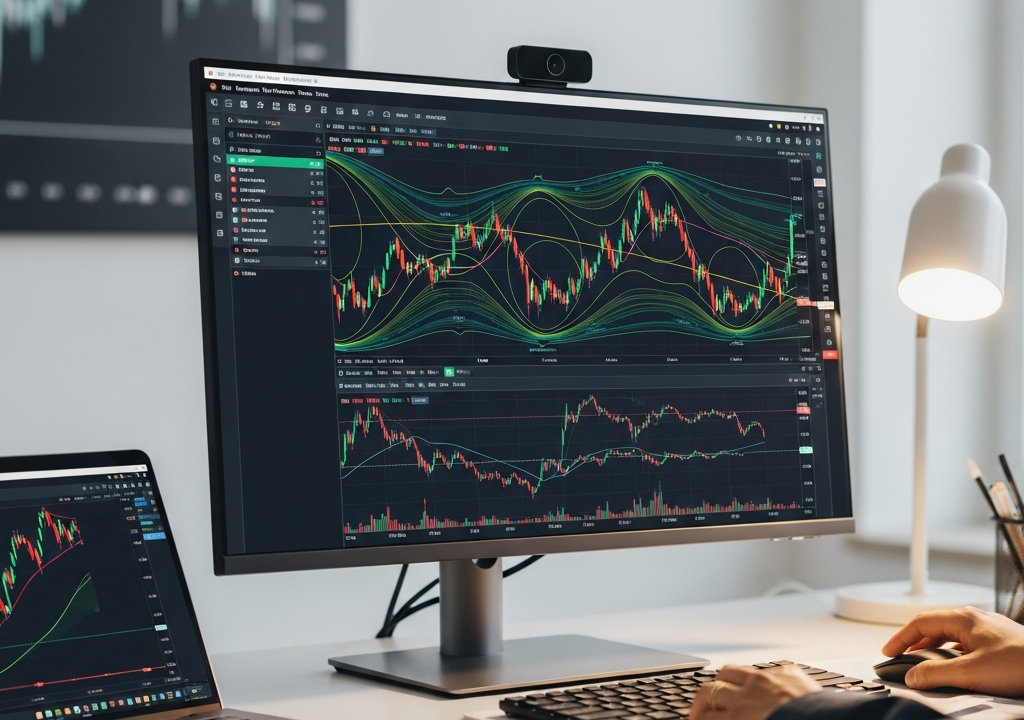
The Fine Fractal Channel is more than just a series of arrows. It is a dynamic overlay that draws a boundary around price action based on the most significant recent fractals. Instead of you manually drawing trendlines—which can be subjective and prone to “trader bias”—the indicator does the heavy lifting for you.
It creates a top border (resistance) and a bottom border (support). As new fractals form, the channel adjusts. This gives you a living, breathing map of where the market is comfortable trading and where it is starting to stretch too far.

How It Differs from Standard Trendlines
Traditional trendlines require two points and an extension into the future. The problem? Markets rarely move in perfectly straight lines for long. The Fine Fractal Channel is more adaptive. Because it is based on the most recent fractal formations, it captures the “fine” nuances of price movement—hence the name. It curves and shifts with the actual rhythm of the market, rather than forcing the market to fit into a rigid, straight line you drew ten minutes ago.
Setting Up the Indicator on MT4
Installation is straightforward, as it follows the standard MT4 protocol. Once you have the files in your MQL4/Indicators folder and have refreshed your platform, you can drag it onto any chart. But the real magic happens in the settings.
Most traders make the mistake of leaving every indicator on “default.” While the default settings for the Fine Fractal Channel are robust, you should consider the timeframe you are trading. If you are scalping on a 1-minute or 5-minute chart, you might want the indicator to be more sensitive. If you are a swing trader looking at the 4-hour or Daily charts, you want it to filter out the minor blips and focus on the major structural shifts.
Customizing the Parameters for Your Style
In the settings menu, you can usually adjust the “period” or the number of bars required to confirm a fractal. A higher number means fewer, more significant channels. A lower number means more frequent updates. Don’t be afraid to experiment. The goal is to reach a point where the channel boundaries act as clear “walls” for the price on your specific timeframe.
Practical Trading Strategies with Fractal Channels
Possessing a tool is one thing; knowing how to swing it is another. Here are two primary ways traders are utilizing the Fine Fractal Channel in 2026.
1. The Dynamic Breakout Strategy
This is perhaps the most popular way to use the indicator. When price has been bouncing between the upper and lower fractal boundaries for a while, it is in a state of consolidation. It’s building energy. Eventually, that energy has to go somewhere.
A breakout occurs when a candle closes firmly outside the channel. If it breaks the upper boundary, it suggests a surge in bullish momentum. However, the “fine” aspect of this indicator helps you avoid head-fakes. Instead of jumping in the second the price touches the line, wait for a confirmed close or even a retest of the channel boundary from the outside. This confirms that the old resistance has now become new support.
2. Mean Reversion within the Channel
Not every market is trending. In fact, markets range about 70% of the time. During these periods, the Fine Fractal Channel acts like a rubber band. When price gets too close to the top boundary, it’s “stretched” and likely to snap back toward the middle or the opposite side. This allows traders to sell at the top of the channel and buy at the bottom, using the fractal lines as logical places to put stop-losses.

Why This Indicator Still Works in 2026
You might wonder why a concept developed decades ago still matters in an era of AI and machine learning. The answer is simple: human psychology doesn’t change. Fractals represent the points where traders collectively decided a price was too high or too low. Even if an AI is placing the trade, it is often programmed to recognize these same structural levels because that is where the liquidity sits.
The Fine Fractal Channel provides a visual representation of this liquidity. It shows you the “battle lines” of the market. In a world of complex black-box systems, having a clean, geometric view of the market is a massive competitive advantage.
Avoiding Common Mistakes
No tool is a magic wand. The biggest mistake traders make with fractal channels is using them in isolation. If the overall trend on a Daily chart is crashing downward, buying a “bottom fractal” on a 15-minute chart is a recipe for disaster. You are essentially trying to catch a falling knife.
Always look at the bigger picture. Use the Fine Fractal Channel to time your entries, but let the higher timeframe tell you which direction to trade. If the Daily trend is up, only look for buy setups at the bottom of your intraday fractal channel. It sounds simple, but this one filter can save you from a thousand small losses.
Pairing the Channel with Other Tools
To really sharpen your edge, try pairing this indicator with an oscillator like the RSI (Relative Strength Index) or a volume indicator. If price hits the bottom of the fractal channel and the RSI shows that the market is oversold, you have two independent reasons to take a trade. That confluence is the secret sauce of successful trading.
Another great pairing is a simple Moving Average. If the price is above a 200-period MA and it touches the bottom of your Fine Fractal Channel, you are looking at a high-probability “buy the dip” opportunity. The channel gives you the precision, while the moving average gives you the context.
Closing Thoughts on Visual Clarity
At the end of the day, trading is about making decisions under pressure. The more cluttered your chart, the harder those decisions become. The Fine Fractal Channel indicator for MT4 is a favorite among price action enthusiasts because it cleans up the mess. It turns chaotic price movements into a structured path, allowing you to see the market for what it actually is: a series of pushes and pulls between two boundaries.
Whether you are a scalper looking for quick hits or a swing trader holding positions for days, mapping out your trades with fractal-based channels provides a level of clarity that few other indicators can match. Give it a try, tweak the settings to fit your personality, and stop guessing where the next turn will be.


