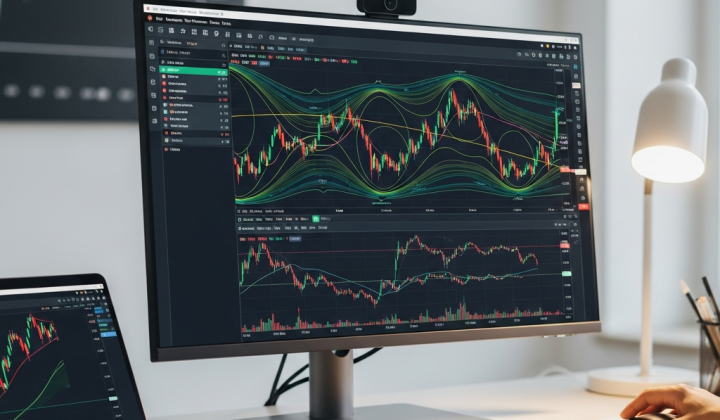

The Hunter’s Clock: Why Timing Is Everything in Smart Money Trading
If you have ever spent twelve hours straight staring at a 5-minute chart only to miss the biggest move of the day because you stepped away to make a sandwich, you have experienced the primary frustration of retail trading. The market moves 24 hours a day, but the smart money—the massive institutional flows from banks and hedge funds—does not. They operate on a schedule. In the world of Smart Money Concepts (SMC), we call these high-activity windows ICT Killzones.
A Killzone isn’t a magic indicator that tells you to buy or sell. Instead, it is a filter. It tells you when the probability of a significant, intent-driven move is at its peak. By focusing your energy on these specific blocks of time, you stop being a frantic observer of price action and start acting like a predator waiting for the right moment to strike. In 2026, with algorithmic trading dominating the landscape, understanding these time-based liquidity cycles is more critical than ever.

The Golden Rule: New York Time Is the Only Time
Before we break down the specific windows, we must address the most common mistake traders make: getting the clock wrong. All ICT Killzones are anchored to New York Local Time (Eastern Time). It doesn’t matter if you are trading from a beach in Bali or a flat in London; your charts must be set to New York time (UTC-5 or UTC-4 depending on Daylight Saving Time).
Why? Because the algorithmic engines that drive global liquidity are synced to the US financial capital. When the US shifts for Daylight Saving, the Killzone shifts with it. If you try to hard-code these hours into your local time zone without accounting for the New York flip, you will find yourself trading into dead air for half the year. Set your TradingView or MT5 clock to ‘America/New_York’ and leave it there.
The Four Canonical ICT Killzones Explained
While the market is a continuous flow, ICT methodology identifies four primary windows where volatility clusters. Let’s break them down by their specific characteristics and why they matter.
1. The Asian Killzone (20:00 – 00:00 ET)
Often misunderstood as a “quiet” session, the Asian Killzone serves a very specific purpose in the weekly and daily narrative. While pairs like AUD/USD or USD/JPY might see genuine trends here, for most major pairs, this session is about accumulation. Price often coils into a tight, sideways range.
- The Purpose: To create a “liquidity sandwich.” The highs and lows of the Asian range represent pools of resting stop orders that London and New York traders will target later.
- The Strategy: Generally, you aren’t looking to trade inside this zone. You are marking its boundaries to see who gets “hunted” during the London open.
2. The London Killzone (02:00 – 05:00 ET)
This is where the real fireworks often begin. As the European banks open their doors, the volume spikes. The London Killzone is famous for creating the “Judas Swing”—a deceptive move that runs opposite to the true daily direction to trap retail traders and engineer liquidity.
- The Purpose: To establish the daily high or low. In a bullish day, London will often drop price below the Asian range low to pick up buy orders before rallying.
- The Strategy: Look for a sweep of the Asian range or the previous day’s extremes followed by a rapid rejection.
3. The New York Killzone (07:00 – 10:00 ET)
The heaviest hitter of them all. This window covers the New York open and the high-impact news releases (usually at 08:30 and 10:00 ET). This is where the “Big Dogs” play. If London established the trend, New York often provides a continuation or a high-probability retracement entry.
- The Purpose: To capitalize on the London-New York overlap, which is the most liquid period in the global financial system.
- The Strategy: Many traders prefer the 08:30 ET start time to avoid the pre-news “noise.” The goal here is to find a Fair Value Gap (FVG) or Order Block created by the news-driven displacement.
4. The London Close Killzone (10:00 – 12:00 ET)
As European traders head home, they must square their positions. This often leads to a “retracement” or a complete reversal of the morning’s move. If the day has been a massive one-way trend, the London Close often sees a profit-taking move that can be traded for a quick scalp.

The Anatomy of a Killzone Setup
Simply being at your desk during the New York Killzone isn’t a strategy. You need a mechanical sequence to turn that time window into a trade. Here is the blueprint for a high-probability Killzone entry:
Step 1: The Liquidity Sweep
Inside the Killzone, you are waiting for price to “reach” for something. This is usually the Asian Session high/low, the previous day’s high/low, or a set of relatively equal highs/lows. We want to see price spike through these levels to grab the stops sitting there.
Step 2: Market Structure Shift (MSS)
A sweep alone is just a spike. To confirm the “Smart Money” is actually reversing the price, we need to see a Market Structure Shift. This occurs when price aggressively breaks the most recent swing high or low in the opposite direction of the sweep. This break must be energetic—think of it as a “displacement” move.
Step 3: The Imbalance (Fair Value Gap)
When price moves fast, it leaves a hole in the chart where only one side of the market (buyers or sellers) was filled. This is a Fair Value Gap (FVG). We look for price to return to this gap inside the Killzone for our entry. This ensures we are getting a “discount” price in a bullish setup or a “premium” price in a bearish one.
Step 4: Execution and Risk Management
Your stop loss goes behind the candle that swept the liquidity. If price returns to that level, the setup is invalidated. In 2026, market volatility can be erratic, so never risk more than 0.5% to 1% per setup, regardless of how “perfect” the Killzone looks.
The Silver Bullet: A Specialized Window
You may have heard of the “ICT Silver Bullet.” While often lumped in with Killzones, it is actually a more surgical, one-hour window. The most popular Silver Bullet occurs from 10:00 to 11:00 ET. This hour is unique because it sits at the intersection of the New York morning session and the London Close. It is designed to catch a single, clean 10-15 pip move based on a simple FVG entry. Think of the Killzone as the whole hunting ground and the Silver Bullet as the precise moment the target enters your sights.
Common Pitfalls: Why Traders Fail with Killzones
Despite the clarity of these time windows, many traders still lose money. Usually, it’s due to one of these three mistakes:
- Trading the Clock, Not the Chart: Just because it is 07:00 ET doesn’t mean you have to click ‘Buy.’ If there is no liquidity sweep and no structure shift, there is no trade. The clock is a filter, not a trigger.
- Ignoring High-Impact News: The 08:30 ET New York news can wipe out even the most perfect technical setup. Professional traders often wait for the initial news spike to clear (the “clearing of the board”) before looking for an entry 15-30 minutes later.
- The Conspiracy Mindset: Many retail traders believe the “banks” are personally hunting their 0.1 lot stop loss. In reality, institutions are hunting liquidity pools—thousands of orders clustered at obvious levels. It’s not personal; it’s just the mechanics of filling large orders.
Final Thoughts for the Modern Trader
ICT Killzones are a powerful tool because they respect the reality of how global markets function. They acknowledge that volume is not a constant, but a pulse. By aligning your trading with the New York clock, focusing on liquidity sweeps, and demanding a market structure shift, you move away from the gambling aspect of retail trading and toward a professional, time-based methodology.
As we navigate the markets in 2026, remember that the best trade is often the one you don’t take because it happened outside of a Killzone. Discipline in timing is just as important as discipline in risk. Master the clock, and you master the market.